
Merengue
Music · Dance · Dominican Republic · Also known as: merengue típico, perico ripiao
Picture a colmado on a Saturday afternoon. Doors open to the street. Music louder than the conversations. Someone's already dancing before they've finished their drink. Nobody asked permission. Nobody needed to.
That is merengue in its natural state — unguarded, communal, and completely alive. It has been that way for nearly two centuries. And the fact that it survived everything that tried to tame it is part of what makes it worth knowing.
The Name
The word merengue appeared in print for the first time in a Dominican publication called El Oasis in 1854. Its origins predate that reference by several decades. Where the name itself comes from remains debated — some connect it to the French word méringue, others to African linguistic roots. No single etymology has been confirmed. What is certain is that by the time anyone wrote it down, the music had already been alive in the bodies of the people for a generation.
Three Cultures, One Sound
Merengue emerged in the mid-nineteenth century in the rural Cibao valley in northern Dominican Republic, around the city of Santiago. From the beginning it carried three distinct cultural fingerprints, and understanding those fingerprints is understanding the entire history of the island in musical form.
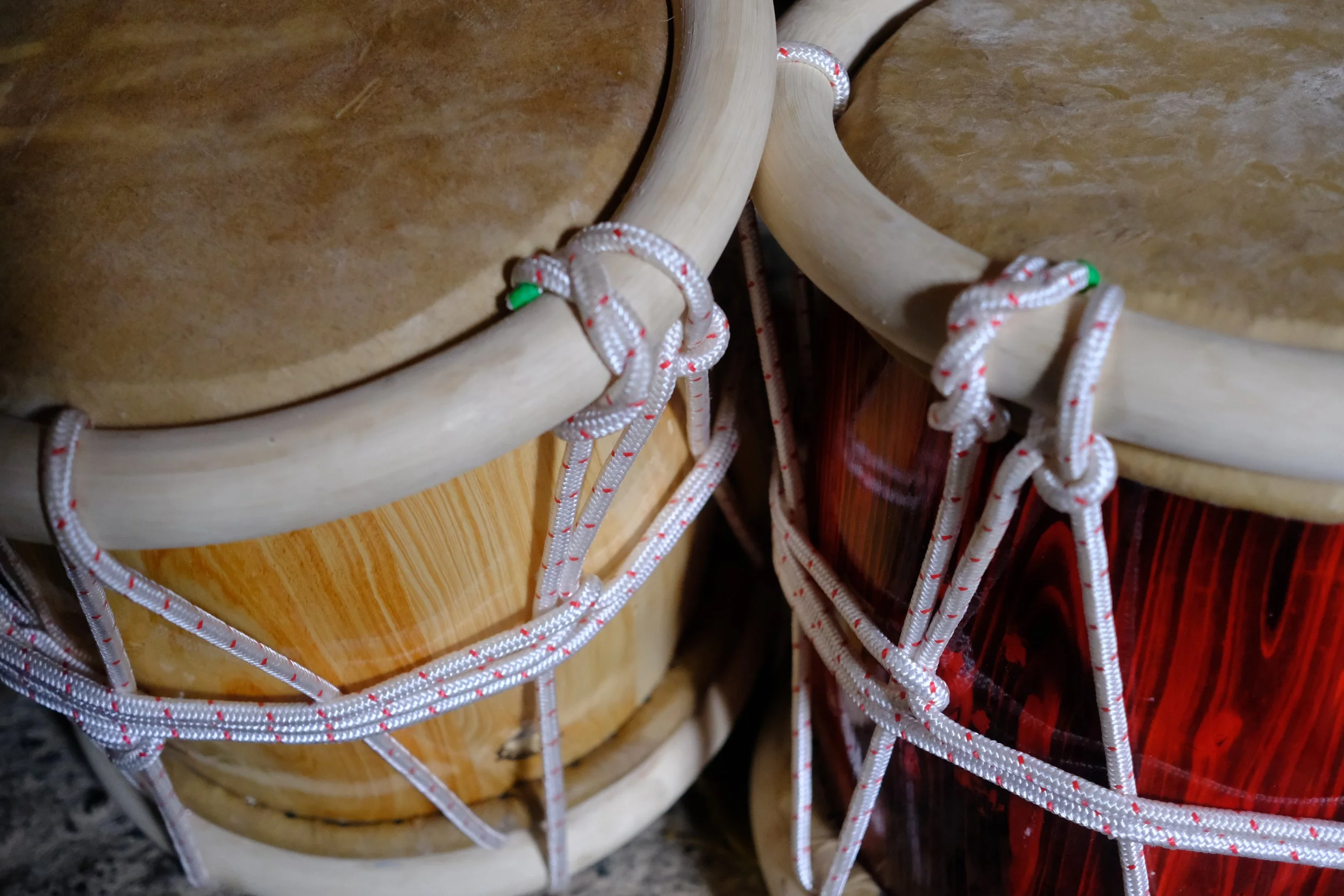
The tambora, a two-headed drum of African origin, brought to Hispaniola through the transatlantic slave trade. It carries the heartbeat of the music, the pulse that everything else organizes itself around.
The güira, a metal scraper believed to be of Taíno indigenous origin. Its sharp, rhythmic scratch cuts through everything else. It is the oldest voice in the room.
The accordion, a European instrument, was introduced to the Cibao valley by German traders in the late 1800s, who exchanged their instruments for tobacco. When it arrived, it replaced the stringed instruments that had come before and became the melody that carried the tambora's heartbeat out into the world.
African. Indigenous. European. Three instruments were forced together by the same colonial history that shaped the island itself, and from that collision, something entirely new and entirely Dominican emerged.
As ethnomusicologist Paul Austerlitz documents in Merengue: Dominican Music and Dominican Identity, the music developed from a fusion of African influences with French and Spanish contradanse traditions. Similar forms appeared across the Caribbean — in Cuba, Puerto Rico, Venezuela, and Haiti — but the Dominican form became the dominant one. By the second half of the nineteenth century, merengue was the music of the Cibao. By the twentieth, it would become the music of a nation.
Perico Ripiao
The oldest and most traditional form of merengue is called perico ripiao. The name, according to legend, comes from a brothel in the Cibao where the music was originally played. Whether or not the story is true, what it tells you is accurate: merengue began in the places polite society preferred not to acknowledge.
When moralists tried to ban it in the 1840s for its sensual dancing and direct lyrics, the attempts failed and made it more popular. Former Dominican President Ulises Espaillat banned it from public spaces in the late nineteenth century. Dominicans kept playing it in their homes.
Perico ripiao is the country music of the Dominican Republic — accordion-driven, honest, rooted in the soil of the Cibao, and stubbornly alive. It is the music of people who did not need permission to feel joy.
The Diaspora Carries It
In 1967, merengue arrived at Madison Square Garden for the first time. By the 1980s, massive Dominican emigration to New York and Miami carried it across the Atlantic and into the neighborhoods of the diaspora. It beat out salsa on New York radio. All-female orchestras like Las Chicas del Can became celebrated. The music was no longer just Dominican, it was the sound of Dominicans everywhere they went.
Juan Luis Guerra — trained at Boston's Berklee College of Music — changed the scale of it entirely. He slowed it down, added lyrical depth and social commentary, and internationalized merengue in a way no one before him had managed. His album Ojalá que llueva café made merengue a global conversation. For a generation of listeners far beyond the Caribbean, merengue meant Juan Luis Guerra.
For Dominicans in New York, Madrid, and Montreal, merengue is the sound of home — played at birthdays, weddings, quinceañeras, house gatherings, and political campaigns. It travels with the people who love it. It always has.
The Dictator Who Made It National
This is the most complicated chapter of merengue's story — and the most important to understand.
Rafael Trujillo seized the presidency of the Dominican Republic in 1930 and ruled until his assassination in 1961. He came from humble, rural origins and had been excluded from elite social circles his entire life. He carried that exclusion as a wound. When he encountered merengue — a music of the countryside and the barrios that the upper classes looked down upon — he saw an opportunity.
Trujillo made merengue the national music and dance of the Dominican Republic. He brought orchestras to the capital, mandated its presence at official events, and required composers to write songs in his honor. Titles like Trujillo Is Great and Immortal became mandatory merengue subjects. His brother Petán owned the state radio station La Voz Dominicana and controlled which musicians received airtime. Only those favored by the regime could be heard.
But Trujillo's motivations were not simply cultural vanity. Austerlitz argues that his promotion of merengue was part of a broader strategy of Hispanicism — an attempt to define Dominican identity as closer to European than African. This was the same Trujillo who, in 1937, ordered the massacre of thousands of Haitian men, women, and children living near the Dominican border and in the northwestern frontier — an estimated 9,000 to 30,000 people killed in the space of less than two weeks — despite the fact that his own maternal grandmother was Haitian. The promotion of merengue and the erasure of Haitian lives were part of the same political project: the construction of a Dominican identity that denied its own African and Caribbean roots.
The music survived the dictator. After Trujillo's assassination in 1961, musicians finally had freedom. Johnny Ventura brought merengue into the modern era with R&B and rock influences, making it faster, freer, and more honest. The music returned to the people it had always belonged to.
Recognition
On November 30, 2016, UNESCO inscribed Music and dance of the merengue in the Dominican Republic on its Representative List of the Intangible Cultural Heritage of Humanity.
The word first appeared in print in 1854. The formal recognition came 162 years later.
Some things take time to be seen.
A Note on Its Many Forms
Merengue is not one thing.
Perico ripiao — the original accordion-driven form — remains the heartbeat. Merengue de orquesta brought it to the cities and the ballrooms.
Merengue urbano carried it into the twenty-first century with electronic production and new rhythms.
Each form is a generation's conversation with what came before.
The Tambora, will have its own article in Nayúr. The instrument and the music are inseparable, but each deserves its own telling.
What It Carries
Merengue has been banned, weaponized, commercialized, and internationalized. It has been used to prop up a dictatorship and to mourn its end. It has crossed oceans in the luggage of people who had very little else to carry.
And through all of it, the doors of the colmado stayed open. The music kept playing. Someone kept dancing before they finished their drink.
That is what merengue carries — not just rhythm, but resilience. Not just joy, but the particular joy of a people who refused to let anyone, not even a dictator, take the music away.
Sources & Further Reading
Austerlitz, P. (1997). Merengue: Dominican Music and Dominican Identity. Temple University Press
UNESCO (2016). Music and dance of the merengue in the Dominican Republic. Intangible Cultural Heritage List. ich.unesco.org
Pacini Hernandez, D. (1995). Bachata: A Social History of a Dominican Popular Music. Temple University Press
Sellers, J. (2004). Merengue and Dominican Identity: Music as National Unifier. McFarland & Company
Duany, J. (1994). Quisqueya on the Hudson: The Transnational Identity of Dominicans in Washington Heights. CUNY Dominican Studies Institute
This article is part of Nayúr, a living digital encyclopedia and archive of Caribbean knowledge and culture. It is written for educational and cultural reference only.