
Plantain
Musa × paradisiaca · Musaceae. Also known as: plátano macho, cooking banana, green banana
There are foods that feed you. And then there are foods that carry you — across oceans, through generations, from one world into another. The plantain is the second kind. It arrived in the Caribbean in 1516, brought by friar Tomás de Berlanga, from the Canary Islands to the island of Hispaniola. It came with almost nothing. And it never left.
Where It Begins
The plantain (Musa × paradisiaca) is not native to the Caribbean or Latin America. It is, at its roots, a plant of Southeast Asia — a sterile hybrid born from two wild ancestors, Musa acuminata and Musa balbisiana, first cultivated in the regions spanning northeastern India through Indonesia and the islands of New Guinea. Archaeological evidence suggests humans began cultivating Musa plants as far back as 10,000 years ago, making the plantain among the earliest food crops in human history.
From Southeast Asia, it traveled westward through ancient trade networks, reaching the Indian subcontinent and eventually East and West Africa, where it became a foundational staple long before Europeans arrived. By the time Portuguese and Spanish explorers set sail across the Atlantic, the plantain was already deeply embedded in African foodways.
Its Caribbean arrival is documented by the Spanish chronicler Gonzalo Fernández de Oviedo in his Historia General y Natural de las Indias (1535). He records that in 1516, Friar Tomás de Berlanga brought plantain shoots from the Canary Islands to Hispaniola — the island now shared by the Dominican Republic and Haiti. It would not take long to become irreplaceable.
The Plant Itself
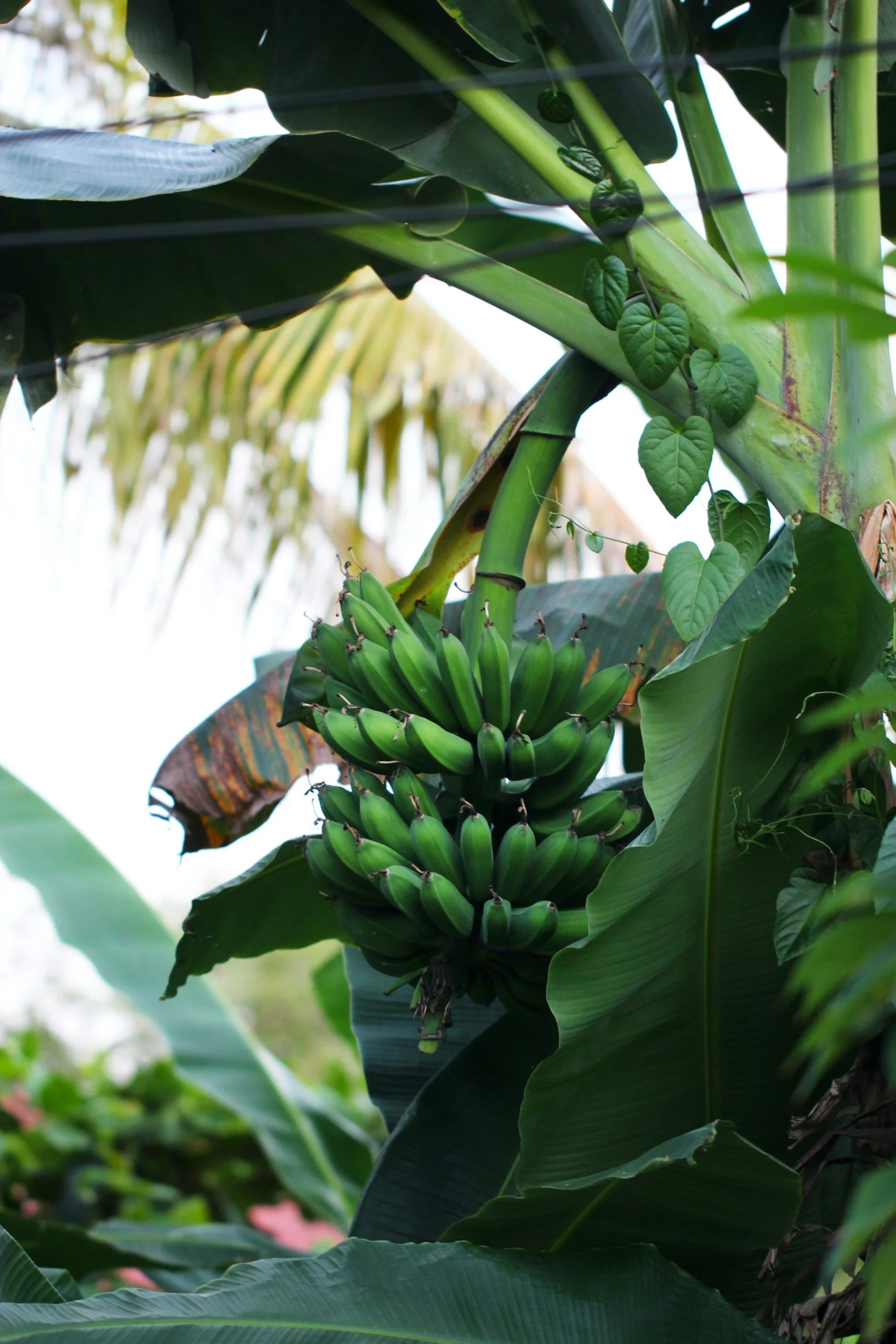
Technically, the plantain is not a tree. It is a giant herb — one of the largest in the plant kingdom — growing between 2 and 9 meters tall on a pseudostem built from tightly packed leaf bases rather than wood. Each pseudostem fruits once and then dies, but the underground rhizome sends up new shoots, and the cycle continues. A single plant is quietly, persistently generative.
The fruit is larger and starchier than the dessert banana, with a thicker skin and flesh that does not surrender its flavor raw. The plantain demands fire — a pan, a pot, a grill — and rewards those who apply it with something entirely its own. Green and firm, it is savory and starchy. Yellow and soft, it sweetens. Black-skinned and yielding, it caramelizes into something approaching dessert. Three fruits in one, depending only on time and patience.
Across the Atlantic
The full story of the plantain in the Caribbean cannot be told without honesty about how it arrived.
When enslaved Africans were forced onto ships bound for the Americas, the plantain came with them — partly as a cheap, calorie-dense provision for the crossing, and partly as something no one can fully document: a taste of a world being left behind. Already familiar with the plant and its preparation, enslaved Africans grew plantains alongside crops like yams and cassava to supplement what little they were given to survive. Cooking became, as scholars of the period have noted, a radical act of self-sufficiency. The plantain — adaptable and nourishing — became a culinary anchor.
And from that anchor, an entire culinary world grew.
What It Became
These are the dishes that grew from that world.
Mangú, the Dominican Republic's beloved breakfast — boiled green plantain, mashed, topped with sautéed onions, fried cheese, salami, and eggs — traces its lineage to the Congo region, where a similar preparation of boiled and mashed starchy vegetables was part of daily life. The word most likely descends from mangusi, a Congolese term for any root vegetable boiled and mashed, brought to Hispaniola by enslaved Africans during the transatlantic slave trade. A popular folk story credits American soldiers during the 1916 occupation — supposedly exclaiming "man, good!" upon tasting it — but written Dominican references to mangú predate that occupation by decades. The African root is the credible one.
Mofongo, Puerto Rico's iconic mash of fried green plantains with garlic, pork cracklings, and olive oil, takes its name from the Angolan Kikongo word mfwenge-mfwenge, meaning a great amount of anything at all. Its ancestor is West African fufu. Its soul is Afro-Caribbean. Food historian Cruz Miguel Ortiz Cuadra, in Eating Puerto Rico, documents how the technique of kneading starchy foods — brought by Central African enslaved people, fused with the ingredients available on the island to create something enduring. The first known printed recipe for mofongo appeared in Puerto Rico in 1859.
Across the Caribbean and Latin America, the plantain continued to shape itself to each place it landed: tostones and patacones, twice-fried and salted; tajadas, thin-sliced and golden; maduros, soft, sweet, and caramelized; kelewele in Ghana; alloco in Côte d'Ivoire. The same fruit, carried across the same ocean, expressing itself differently in every soil it touched.
Nutritional & Medicinal Properties
In many Caribbean and Latin American traditions, the plantain has been valued beyond the kitchen. Unripe green plantain has long been considered a gentle, filling food for those with digestive complaints — its resistant starch thought to support gut health and stabilize blood sugar. Contemporary research has found evidence supporting these traditional beliefs, though human clinical trials remain limited.
Plantain leaves — the large, broad canopy leaves of the plant — have been used in poultice preparations in some folk traditions, applied to minor wounds and skin irritations. These uses reflect a broader relationship between communities and this plant that goes far deeper than the dinner table.
In the Kitchen
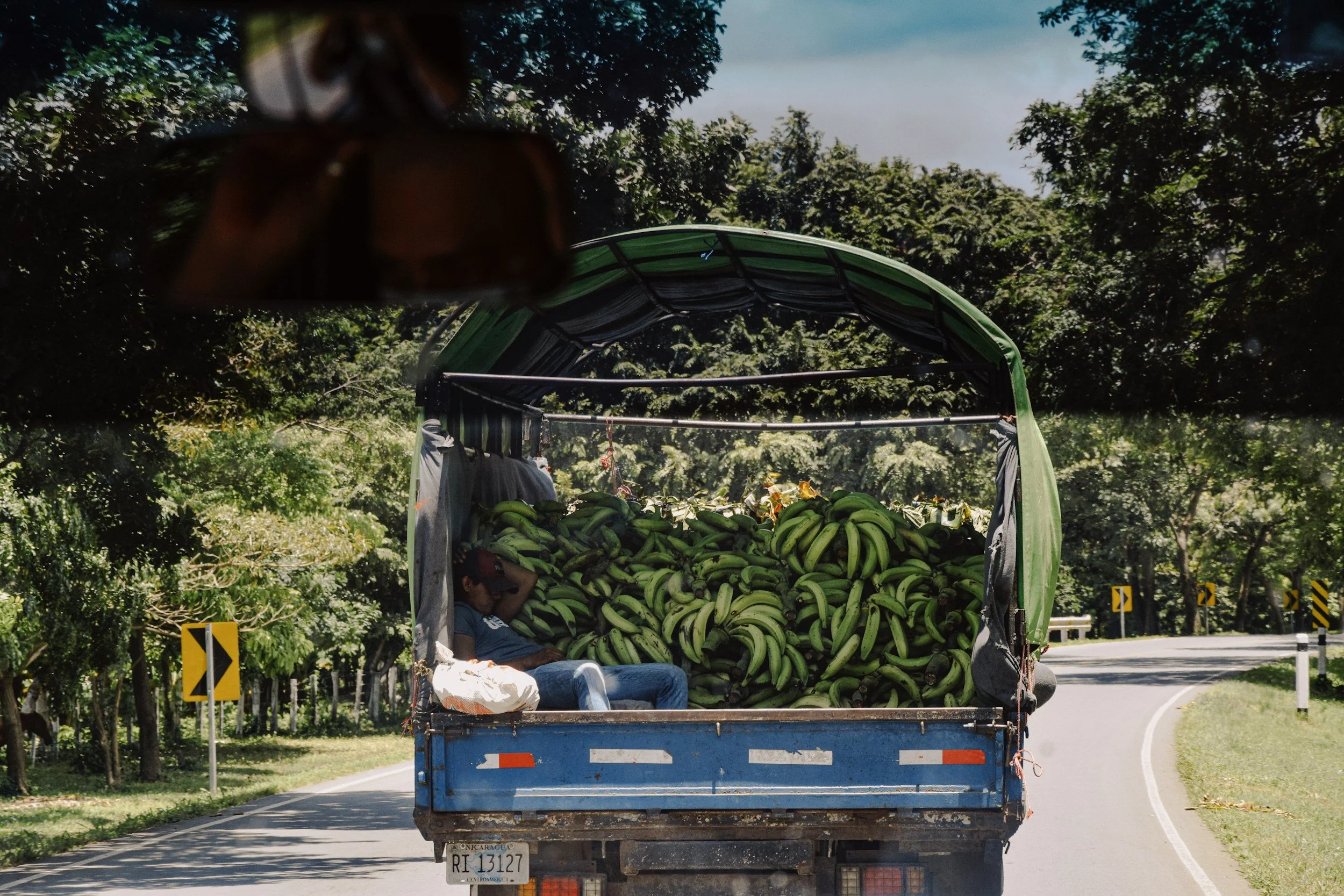
Green plantains are firm and starchy — best fried, boiled, or mashed. They hold their shape, absorb seasoning well, and carry the weight of a full meal. As the plantain ripens, its resistant starch gradually converts to natural sugars. Yellow plantains are softer, sweeter, and more forgiving. Black-skinned plantains — often discarded by those who don't know better — are fully ripe, intensely sweet, and ideal for maduros or baked preparations. Nothing is wasted. Everything has its moment.
More Than Food
There is a reason the plantain appears in poetry, in protest songs, in the names of neighborhoods and the titles of cookbooks. It is not just that it feeds people — though it does, reliably, across generations. It is that it remembers.
For the diaspora — Dominicans in New York, Puerto Ricans in Orlando, Colombians in Madrid — the plantain is a piece of geography that travels. It smells like somewhere specific. It sounds like oil in a pan on a Sunday morning. It remembers the person who taught you to make it, and the person who taught them.
For those encountering it for the first time: what looks like a large banana in a market stall is carrying centuries of history, of movement, of survival. Treat it accordingly.
The Plantain Today
The plantain is currently the tenth most consumed staple food in the world. Nigeria, Rwanda, and the Democratic Republic of Congo remain among the largest consumers — a reminder that the Caribbean's relationship with this fruit is part of a far larger global story. In the Latin-Caribbean, it remains daily sustenance: at breakfast as mangú, at lunch alongside rice and beans, at dinner as a sweet counterpoint to savory meat.
Research continues into its potential: as a source of resistant starch with prebiotic properties, as a gluten-free flour alternative, and as a resilient crop for food security in tropical regions increasingly affected by climate change. The plant that survived the middle passage is proving, once again, that it endures.
Final note
The plantain did not choose its history. It was carried — across oceans, across generations, in the hands of people who held onto it because it held something of home. What arrived in the Caribbean as provision became identity. What began as survival became culture.
Every tostón, every mangú, every plate of maduros is a small act of continuity — a thread running from a kitchen in Santo Domingo or San Juan or Lagos back through centuries to the moment someone decided this fruit was worth keeping.
It was. It is.
Sources & Further Reading
Fernández de Oviedo, G. (1535). Historia General y Natural de las Indias
Ortiz Cuadra, C.M. (2013). Eating Puerto Rico: A History of Food, Culture, and Identity. University of North Carolina Press
González, C. (2001, updated 2026). Where Does the Word Mangú Come From? DominicanCooking.com
Whetstone Magazine (2022). To Puerto Ricans, the Plantain Is More Than a Food. whetstonemagazine.com
FAO (2020). Banana and Plantain Commodity Notes. Food and Agriculture Organization of the United Nations
This article is part of Nayúr, a living digital encyclopedia and archive of the Latin-Caribbean culture. It is written for educational and cultural reference and does not replace medical or nutritional advice. Always consult a qualified healthcare professional before making changes to your diet or health practices.