
Tambora Dominicana
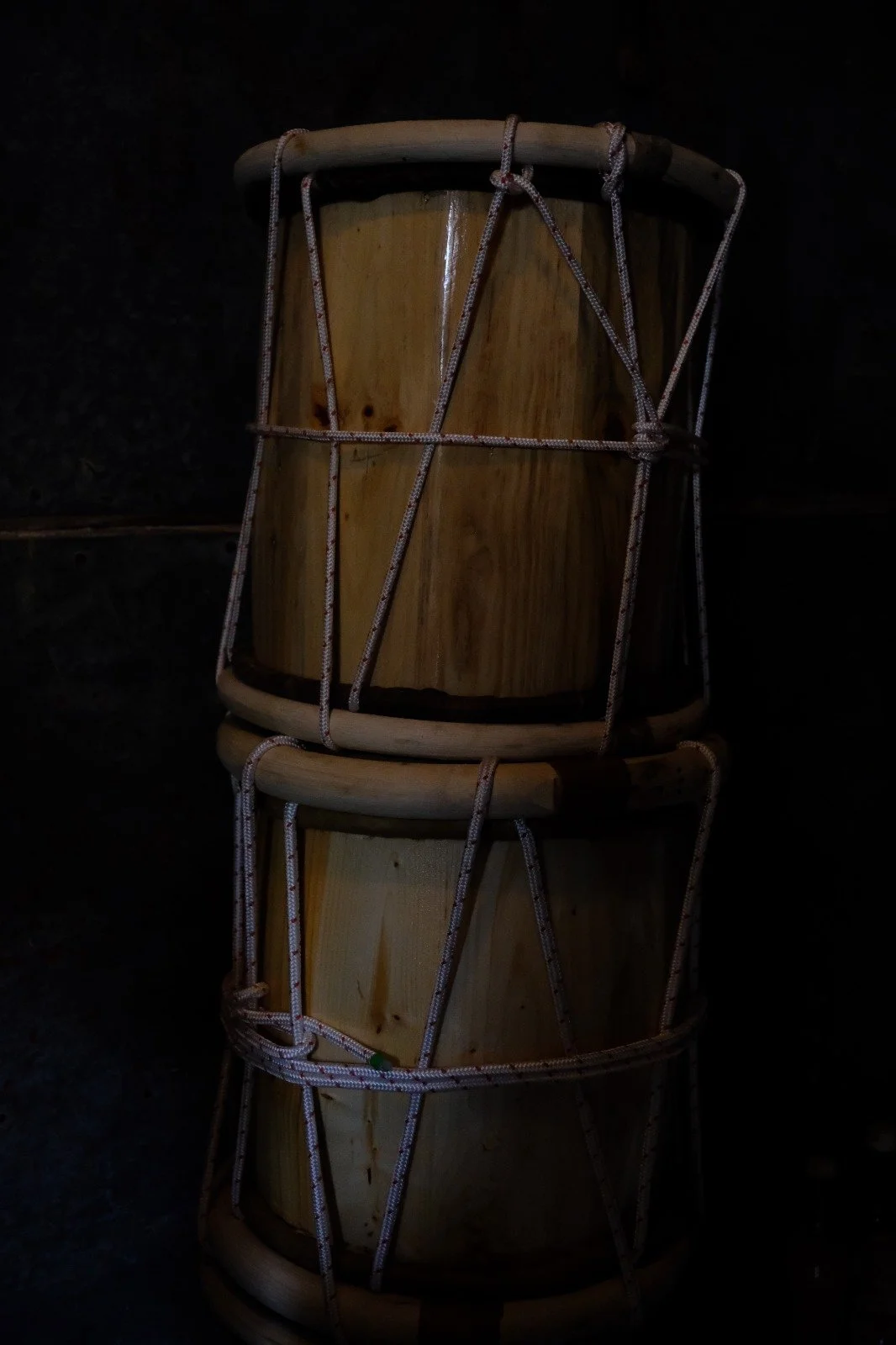
Scientific name: Double-headed membranophone percussion instrument
Description
Cassava is a perennial woody shrub belonging to the spurge family (Euphorbiaceae). It typically grows between 2 and 4 meters tall, with slender stems and hand-shaped leaves divided into five to nine lobes. The plant produces small clusters of yellow-green flowers, though its most valued feature lies underground: elongated, tapered roots. These roots have rough brown skin and a starchy interior that may be white, yellow, or occasionally reddish. Once properly processed, they provide a dense source of carbohydrates and form a cornerstone of diets across the tropics.
Habitat & Cultivation
Native to tropical Central and South America, cassava was domesticated in multiple regions of South America, with archaeological evidence dating back over 7,000 years, particularly in areas of present-day Brazil, Paraguay, and Peru. From there, it spread throughout the Americas and later across Africa, Asia, and the Caribbean via Portuguese and Spanish trade in the 16th century. Today, cassava is one of the most widely cultivated root crops in the world. Both bitter and sweet varieties are grown commercially throughout the tropics, with Nigeria, Thailand, and Brazil among the leading producers.
Cassava thrives in tropical and subtropical climates, tolerating poor soils and drought better than most staple crops. It can be grown with minimal agricultural inputs, making it essential for food security in many regions. Depending on the variety, roots require 8 to 24 months to mature before harvest. Today, cassava remains especially critical in sub-Saharan Africa, where it serves as a dietary staple for millions of people.
Related Species
Cassava belongs to the genus Manihot, which includes approximately 100 mostly wild species native to the Americas. Related species include the Ceará rubber tree (Manihot glaziovii) and Manihot carthaginensis. The wider Euphorbiaceae family contains a diverse range of plants, including the castor bean (Ricinus communis), poinsettia (Euphorbia pulcherrima), and rubber spurge (Euphorbia tirucalli).
Safety & Processing
Cassava roots and leaves naturally contain cyanogenic glycosides, which can release toxic cyanide if consumed improperly. Traditional processing methods such as soaking, fermenting, drying, boiling, and roasting are essential to render cassava safe for consumption. Bitter varieties, in particular, require thorough processing before use. These practices have been developed and refined over generations and remain critical to safe consumption today.
Primary Uses & Applications
Serves as a reliable source of calories during periods of food scarcity
Provides a gluten-free flour alternative to wheat-based products
Contributes micronutrients through its leaves in starch-heavy diets
Functions as an industrial raw material (use of starch for paper, textiles, biofuel, adhesives)
Research and Contemporary Applications
Contemporary research on cassava focuses on several key areas:
Biofortification: Developing yellow cassava varieties with higher vitamin A content to address malnutrition.
Resilience: Enhancing drought and pest resistance to secure harvests under climate change.
Food technology: Improving processing methods to reduce cyanide risk in large-scale production.
Industry: Expanding the use of cassava starch in biofuels, paper, textiles, adhesives, and biodegradable plastics.
History & Folklore
Cassava was a central crop for Indigenous peoples of South America and the Caribbean, including the Taíno, for whom it formed the basis of daily sustenance and ceremonial life. Among Taíno communities, cassava was processed into flatbreads known as casabe, a practice that required sophisticated knowledge of detoxification and communal labor.
In the Amazon region, origin stories often explained cassava as a divine or ancestral gift. Among the Tupi-Guarani, a well-known narrative tells of Mani, a young girl whose death gave rise to the first cassava plant, giving rise to the name mani-oca (“house of Mani”).
Introduced to Africa in the 16th century, cassava rapidly became a survival crop and was woven into African foodways and folklore as a symbol of endurance. Across continents, cassava continues to embody resilience and adaptability, sustained by knowledge systems developed and preserved over generations.
Key Constituents
Roots: High in starch (carbohydrates)
Leaves: Contain protein, vitamin A, vitamin C, iron, and calcium
Compounds: Naturally contain cyanogenic glycosides, which can release cyanide. Safe processing methods (soaking, fermenting, boiling, roasting) neutralize these
Traditional and Medicinal Use
Digestive support
In many traditional food systems, cassava root, once fully detoxified, is prepared as a soft and easily digestible food for people recovering from illness, weakness, or surgery. Its bland flavor and starch content are considered gentle on the digestive system.
Fever and infections
Boiled or decocted cassava leaves have long been used in household traditions to help reduce fever. They are also consumed as a strengthening food during periods of infection or low immunity.
Skin and wounds
Fresh cassava leaves are sometimes crushed into poultices and applied to cuts, ulcers, and irritated skin. These topical applications reflect cassava’s role as both a food and a medicinal resource in traditional settings.
Urinary health
In certain folk practices, cassava-based preparations are used to relieve urinary discomfort and to promote urination. These uses are based on cassava’s mild diuretic reputation in local medicinal traditions.
Kidney stones
Some traditional systems employ cassava-based remedies to ease symptoms associated with kidney stones. These applications are anecdotal, vary by region, and are not supported by clinical evidence, but they illustrate cassava’s broader role in renal health traditions.
Diarrhea
Cassava root and leaf preparations have also been used to calm the digestive system in cases of diarrhea. The starch in the root is believed to help firm stools, while leaf decoctions are traditionally consumed for their strengthening effect.
Cultural Notes
Across the Caribbean, Africa, and Latin America, cassava is more than a staple food; it is a cultural anchor. In the Caribbean, it appears as cassava bread, bammy, and farina, closely tied to Indigenous Taíno foodways. In West and Central Africa, it forms the base of foods such as gari, fufu, and attiéké, reflecting its role in sustaining communities through colonial disruption and environmental hardship. Cassava’s enduring presence across continents speaks to its adaptability and to the knowledge systems that preserved it.
This article is for educational and cultural reference only and does not replace medical advice.
Always consult a qualified healthcare professional before making changes to your diet, health, or wellness practices.