
Cacao
Theobroma cacao · Malvaceae. Also known as: kakaw, cacahoaquahuitl, chocolate tree
The Florentine Codex — a sixteenth-century account of Mexica life — records something that stops you cold. Cacao was so precious, so bound up with power and the sacred, that a common person drinking it was considered a bad omen. Only rulers drank it. Great warriors. The commanding few. And even they did not drink it carelessly.
That was cacao before the world decided to call it chocolate. Before it became a bar wrapped in foil, a flavor of ice cream, an ingredient in a birthday cake. Before it was ordinary.
What happened between then and now is one of the most revealing stories the Americas have to tell.
The Name
The ancient Maya called it kakaw. The word cacao is a Spanish adaptation of the Nahuatl kakawa-tl. As for chocolatl — the root of the word the world now uses — it emerged much later, possibly as recently as the sixteenth century. It was not the original name.
Before anything else was taken, the name changed.
The Plant
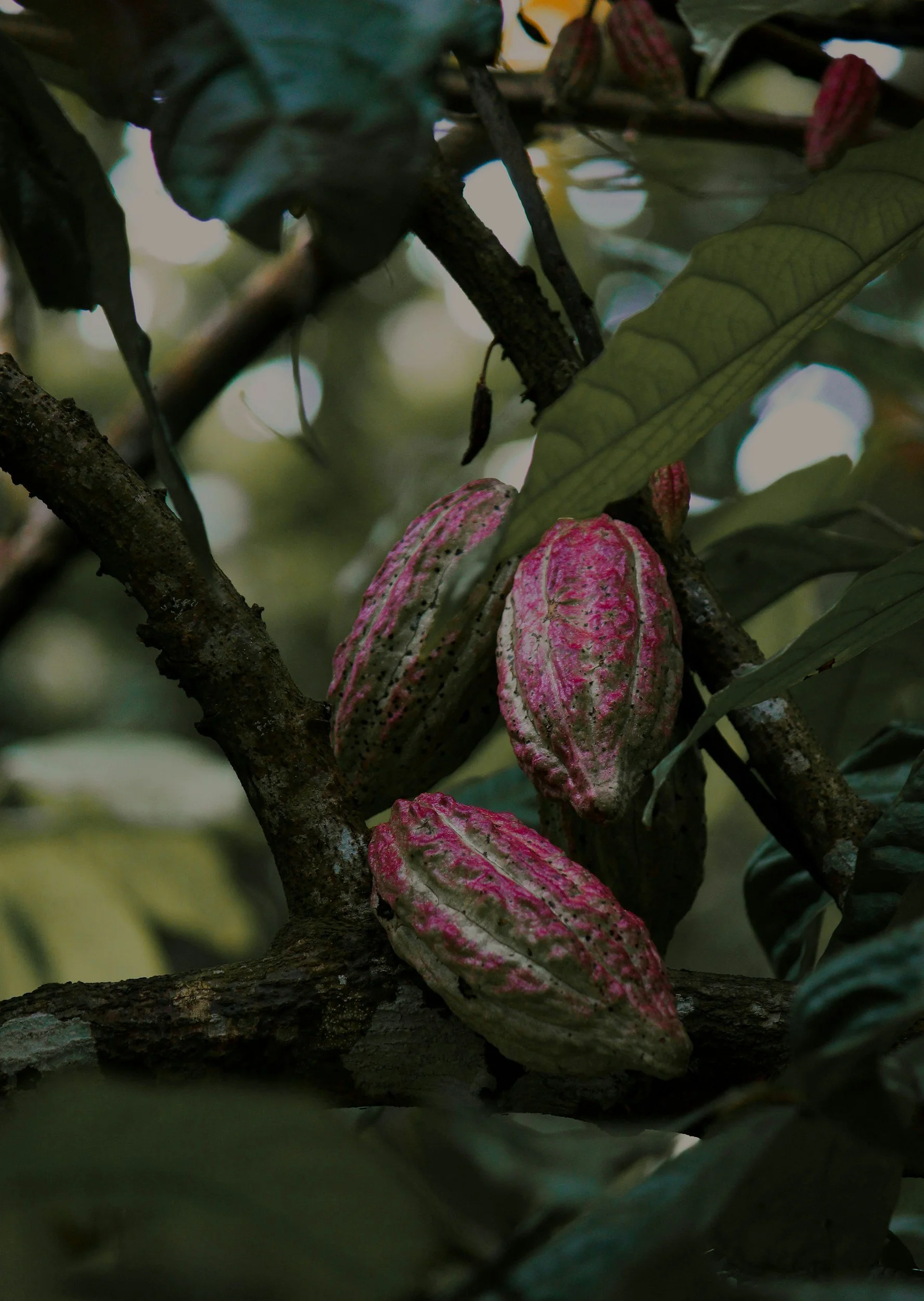
Theobroma cacao — meaning, in Greek, food of the gods — is a small understory tree that thrives in deep shade, high humidity, and fertile river valley soils. It cannot survive frost or drought. In the ancient world, the territories where it could grow were worth fighting over.
What makes the cacao tree visually unlike almost anything else is cauliflory: its flowers and pods grow directly from the trunk and larger branches, not from the tips. Inside each pod, 25 to 40 seeds rest in a sweet white pulp. It is these seeds and this pulp that sustained cultures, fueled economies, and shaped the spiritual life of civilizations.
The seeds are carried by squirrels, bats, and monkeys who eat through the thick pod wall to reach the pulp inside. Ancient Mesoamerican artworks depicted these animals with cacao pods so frequently that the image became a motif. Monkeys and cacao were inseparable in the visual vocabulary of a civilization that understood what the tree needed and what it gave back.
Origins
Theobroma cacao evolved in South America, spreading northward through Central America and into Mexico. Two main varieties emerged. Criollo, endemic to Central America, produces milder, less bitter seeds. Forastero, endemic to South America, is hardier and more productive but more bitter. After Spanish contact, the two were hybridized. Most commercial cacao today is descended from that colonial experiment.
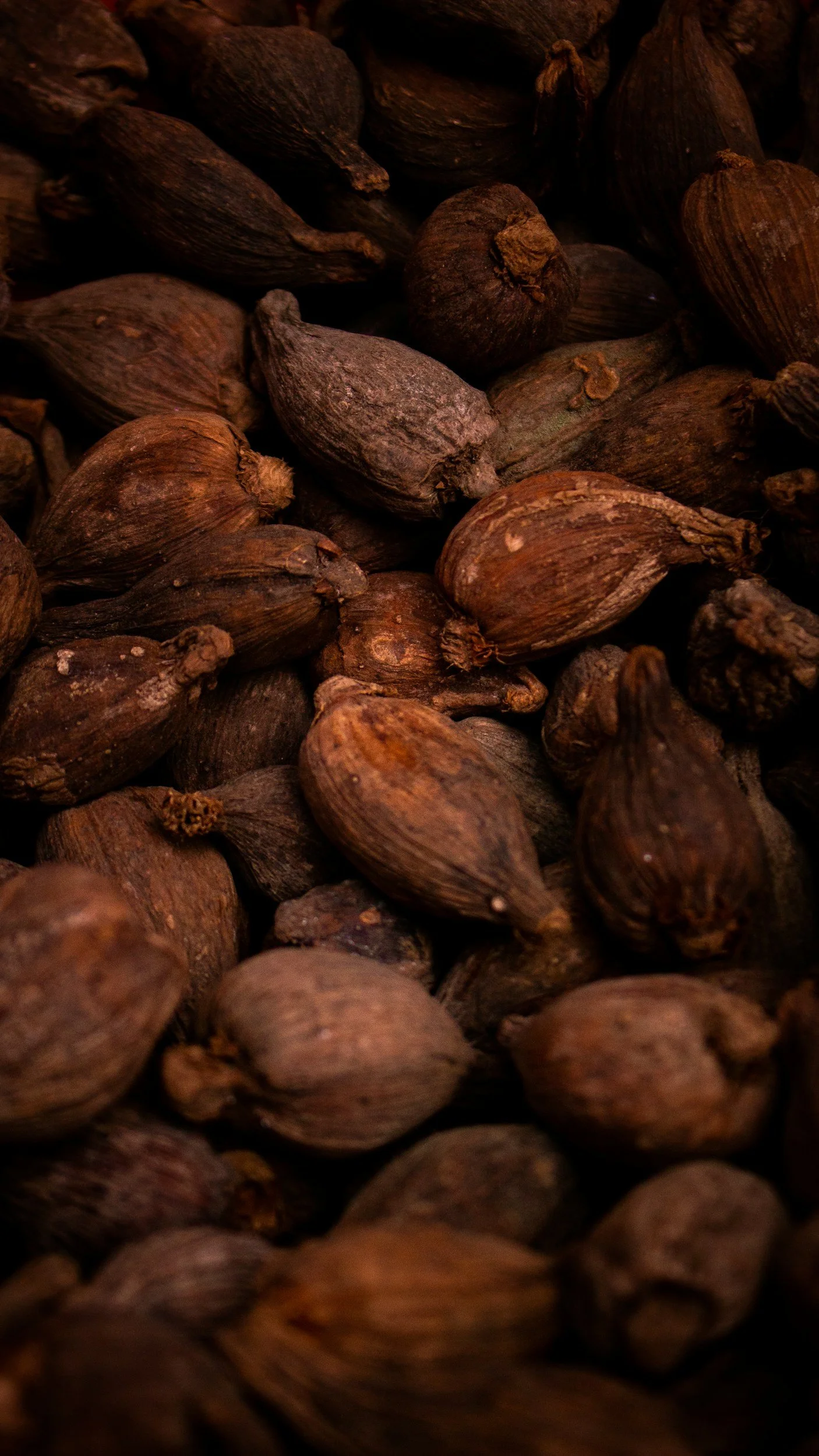
In South America, people first consumed the sweet pulp — fermenting it into beverages. The bitter seeds were largely set aside because other stimulating plants were already available: mate, guaraná, yoco. In Mesoamerica, those alternatives did not exist. And so Mesoamerican peoples worked out, over generations, the elaborate process of fermenting, drying, roasting, and grinding the seeds into something extraordinary. The labor was immense. The rarity of both the labor and the growing conditions transformed cacao into what scarcity and effort always create: the sacred.
The Food of Gods and Power
In pre-Columbian Mesoamerica, to possess cacao was to possess a visible sign of wealth, power, and proximity to the divine.
Cacao seeds served as currency. In the sixteenth century, José de Acosta documented that with five cacao beans one thing could be bought, with thirty another, with a hundred another — without bargaining. As late as 1860, cacao seeds were still used for small change in Nicaraguan markets. The Lenca people of Honduras continue to include cacao in ceremonial offerings to the earth and ancestral spirits — a practice tied to gratitude, healing, and the agricultural cycle. A currency and a prayer, in the same seed.
Wars were fought to control cacao-growing territories. Conquered peoples paid tribute in cacao seeds. And at Motecuhzoma's court, Sahagún documented a diversity of cacao beverages that dismantles any simple idea of what cacao meant: green chocolate from tender cacao, honeyed chocolate with dried flowers and vanilla, bright red, rose-colored, black, and white chocolate — each served in painted gourd vessels with richly designed drinking ware. Not a drink. A ceremony.
This was not for everyone. The Florentine Codex is unambiguous: among certain Nahuatl cultures, a common person drinking cacao was a bad omen. Among the Pipil people of El Salvador, only a great personage, a leader, or a famous warrior was permitted to drink it at all. Access to cacao was access to power. To be excluded from it was to be reminded of your place.
Blood, Sacrifice, and the Sacred
Cacao did not merely represent power. It represented life itself — and death, and everything in between.
Cacao beverages were sometimes colored red with achiote dye because of the visual resemblance to blood. In the Florentine Codex, Sahagún records that heart and blood were the metaphors for cacao — because it was precious as blood is precious. A stela from Santa Lucia Cotzumalhuapa depicts a human figure sacrificing a cacao pod as though it were a human heart, the pod spouting liquid exactly as a heart would. In Mixtec codices, bleeding cacao pods are carved into the tops of temples — the places of sacrifice.
People being prepared for burial were provided with cacao for the journey to the next world. Communities in Mexico's Oaxaca Valley continued this practice into the mid-twentieth century.
In ancient Maya religion, cacao was the first food to grow from the body of the Maize God. At Copan, cacao pods grow from the trunk of a censer in the form of the axis mundi — the World Tree connecting the underworld, the earth, and the heavens. The tree that feeds you becomes the tree that holds the world together.
The Colonial Rupture
The Spanish conquest of Mesoamerica killed, by some estimates, as much as 80 percent of the indigenous population. Disease came first. Then warfare, forced labor, enslavement, and the systematic dismantling of everything that had organized life before.
The Spanish encountered cacao at Motecuhzoma's court and absorbed it as an economic asset. The Mexica tribute system was taken over. Indigenous peoples were forced to convert to Christianity but frequently retained native practices within the new faith — placing offerings of incense, flowers, and cacao on church altars alongside Christian ones. The same wall. Two entirely different prayers.
Most damaging for cacao's cultural survival was a single crop: coffee. As colonial governments pushed indigenous people to convert arable land to more profitable products, coffee took over fields where cacao had once grown. The sacred drink of rulers became marginal in its own homeland.
What Survived
Not everything was lost.
Rain ceremonies involving offerings of cacao continue annually in Ch'orti' Maya communities in eastern Guatemala. In some Maya communities, cacao continues to be used in healing ceremonies and life rituals — though many traditions have been reduced or lost since the colonial period. Where the knowledge has been protected, it continues.
In Belize, a fair trade partnership with a foreign chocolate company has brought cacao back to indigenous farmers economically — but scholars note that in this new context, cacao has largely been stripped of its ceremonial meaning. The seed endures. What it once carried is harder to find.
Where it is protected, it persists. The line between kakaw and the present has not fully broken.
The Distance Between Then and Now
Both versions of this story are true and must be held together. The plant survived, spread, and became beloved by billions. The knowledge that surrounded it, the ceremonies it anchored, the civilizations that understood what it truly was — largely dismantled within a generation.
The distance between a chocolate bar and the painted gourd vessel served to a ruler in Tenochtitlan — surrounded by ceremony, restriction, reverence — is the distance colonialism traveled.
The next time you hold something made from cacao, it is worth pausing. Not with guilt, but with awareness. Behind it is a word — kakaw — spoken in forests that were old when Europe was still finding its shape. Behind it is a civilization that understood that some things are sacred precisely because they demand something of you. Precisely because they are not consumed unthinkingly.
Final Note
Cacao's story begins long before it reached the Caribbean. This article documents its Mesoamerican origins — the civilizations that first cultivated it, traded it, and held it sacred. The Caribbean chapter, including its colonial arrival and the Dominican Republic's living cacao culture, will be published as a continuation of this article. Some roots run deep before they cross oceans.
Sources & Further Reading
McNeil, C.L. (ed.) (2006). Chocolate in Mesoamerica: A Cultural History of Cacao. University Press of Florida
Coe, S.D. & Coe, M.D. (2013). The True History of Chocolate (3rd ed.). Thames & Hudson
Sahagún, B. de (1950–82). Florentine Codex: General History of the Things of New Spain. School of American Research and University of Utah Press
Presilla, M.E. (2001). The New Taste of Chocolate: A Cultural and Natural History of Cacao. Ten Speed Press
FAO (2022). Cocoa Market Report. Food and Agriculture Organization of the United Nations
This article is part of Nayúr, a living digital encyclopedia and archive of the Latin-Caribbean culture. Written for educational and cultural reference only. Always consult a qualified healthcare professional before making changes to your diet or health practices.