
Bush Medicine
Traditional Plant Healing · In the Caribbean also known as: bush tea, plant medicine, medicina de patio
There is always someone who knows.
In the Caribbean, that person is often an aunt. Or a grandmother. Or an uncle who walks slowly through a village, stops at a particular plant, and says — this one is for fever. This one cleans the blood. This one you boil with a little honey and drink before bed. They learned it from someone who learned it from someone else, and so on, going back further than anyone can remember.
That is bush medicine. Not a relic. Not a trend. A living system of knowledge, passed from hand to hand, generation to generation, in the specific and generous way that Caribbean people share what they know.
What It Is
Bush medicine is the practice of using plants — leaves, roots, bark, flowers, seeds — to treat illness, maintain health, and restore balance in the body. The word bush refers to the plants growing in and around daily life. Not imported, not expensive, not hard to find. The lemongrass in the yard. The neem tree by the fence. The bitter vine climbing the back wall that every grandmother in the neighborhood seems to know by name.
It comes as teas, juices, ointments, and what practitioners call coolings — preparations designed to reduce heat in the body. It is used alone or alongside conventional medicine. In most Caribbean households, the two have always coexisted. You drink the tea your grandmother made and you take the pills the doctor prescribed. Neither cancels the other out.
Bush medicine is practiced across the entire Caribbean — the Dominican Republic, Jamaica, Trinidad and Tobago, Barbados, the Bahamas, Curaçao, Haiti, Puerto Rico, and beyond. The specific plants change from island to island. The knowledge, the intention, and the relationship to the land beneath it remain the same.
Where It Comes From
Bush medicine in the Caribbean is not one tradition. It is several, shaped by the same history that shaped everything else on these islands.
The Taíno and Kalinago — the Indigenous peoples of the Caribbean — were the first to read the healing properties of the islands' plants. They knew the land intimately. Their botanical knowledge became the foundation on which everything else was built.
Enslaved Africans arrived with their own plant knowledge from West and Central Africa. Many of the plants they encountered in the Caribbean were familiar — some had crossed the Atlantic on their own, others arrived with the people who knew how to use them. That knowledge survived the crossing. As the Indigenous population declined, freed and maroon communities became the guardians of this botanical tradition.
Laborers recruited from India brought Ayurvedic traditions in the nineteenth century, adding another layer to a system already rich with accumulated wisdom.
What emerged from these worlds meeting was not simply a mixture. It was something new — a healing tradition that belonged entirely to the Caribbean, shaped by its particular history, its particular land, and the particular resilience of the people who lived on it.
How It Works
The body seeks balance. Plants help restore it. That is the simple and profound idea at the heart of bush medicine.
Teas are used for cooling when there is too much heat in the body — from fever, inflammation, infection, or stress. Coolings can be taken to maintain health or as treatment for specific complaints. There are also hot plants, used to stimulate circulation or treat conditions of cold and stagnation. The hot and cold framework appears across Caribbean islands in different forms, rooted in African and Indigenous traditions that predate European contact.
Bush medicine has never been purely physical. A bush bath — known in Spanish as baño — is common across the Caribbean for cleansing both body and spirit. The physical and the spiritual are not separated here. What harms one affects the other. What heals one heals both.
The people who carry this knowledge — herbalists, curanderas, the elders in the neighborhood — work with intention. Harvesting is often done with care and gratitude, following unwritten protocols that respect the plant, the season, and the relationship between the healer and the earth.
The Plants
Every Caribbean kitchen, yard, or village path holds a small pharmacy. These are some of the plants most widely known and trusted across the region.
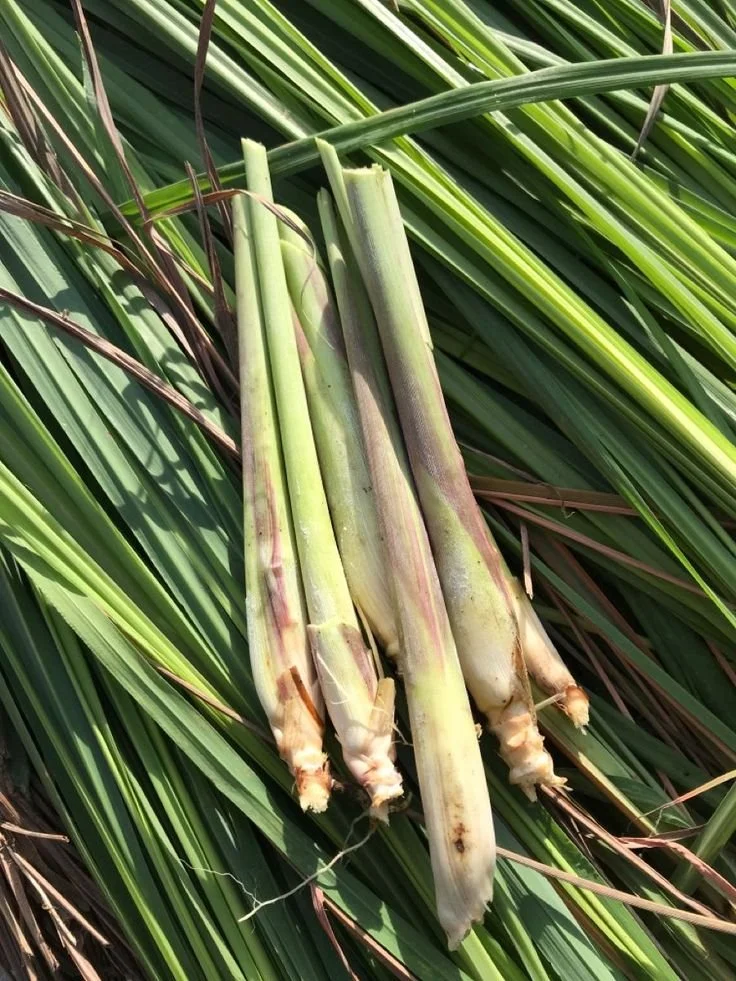
Lemongrass — Cymbopogon citratus — and in the Caribbean it is one of the most reach-for-first plants there is. A tea for fever. A remedy for colds and digestive complaints. A calming drink for a restless night. It grows wild across the islands, smells like something clean and good, and is often the first plant a child is taught to recognize.
Cerasee (Momordica charantia) is the bitter vine that climbs walls and fences across the Dominican Republic, Jamaica, and beyond. It is used to cleanse the blood, treat high blood pressure and diabetes, reduce fever, and soothe skin irritations. Many people across the Caribbean remember being given cerasee tea as children during seasonal cleanses. It is intensely bitter. That, elders will tell you, is how you know it is working.
Neem (Azadirachta indica) came from India with Ayurvedic tradition and made itself completely at home in the Caribbean. It is antibacterial, antifungal, and anti-inflammatory. Used in teas, in skin preparations, in oral care. Some call it the village pharmacy because of how many things it addresses. One tree, a hundred uses.
Soursop leaves (Annona muricata). The fruit is beloved across the Caribbean. The leaves carry a quieter kind of knowledge. Boiled into tea, they are used for sleep, headaches, anxiety, stomach complaints, and relaxation. The connection between the soursop and Caribbean wellbeing runs deep.
Castor oil (Ricinus communis) came from Africa and never left. Used for hair, for skin, for pain, for digestion — its presence in Caribbean households is so constant it barely registers as medicine anymore. It is simply what is kept in the cabinet.
These are not the only plants. A single ethnobotanical survey in Trinidad and Tobago identified more than 900 individual plant remedies. The Caribbean is a biodiversity hotspot, and the knowledge of it, held in the memory of the people who tend it, is equally abundant.
How It Is Passed Down
Bush medicine does not live in books. It lives in people.
It is passed through kitchens and yards and village walks. Through a grandmother who hands you a bunch of leaves and shows you how to bruise them before steeping. Through an uncle who knows every plant on the path by name and what each one is for. Through the specific and unhurried way that Caribbean people share knowledge — not as instruction, but as conversation.
That intimacy is its greatest strength and its greatest vulnerability. When the people who carry the knowledge are gone, and no one thought to stay close enough to learn — the knowledge goes with them. Urbanization, changing family structures, and the reach of the pharmaceutical industry have all placed quiet pressure on these traditions. Not all at once. Slowly, the way things disappear when nobody is paying attention.
This is why documentation matters, this is why Nayúr exists. Not to replace the living transmission — nothing replaces that — but to create a record. Something to return to. Something that says: this was known. This was practiced. This worked.
The Science Catches Up
For a long time, bush medicine was dismissed by formal medical institutions as superstition. That position has become increasingly difficult to hold.
TRAMIL — the Program of Applied Research for Traditional Popular Medicine in the Caribbean — was founded in 1982, born from a collaboration between Haiti and the Dominican Republic. Its first surveys were carried out in those two countries. Since then, it has grown into a network operating across 27 Caribbean territories, completing more than 11,000 interviews documenting traditional plant use and scientifically testing the safety and efficacy of the remedies found.
In the Dominican Republic, TRAMIL has worked directly with the Ministry of Health, training community facilitators in medicinal plant use and reaching hundreds of people through health programs rooted in traditional knowledge. The Caribbean Herbal Pharmacopoeia — a recognized scientific publication produced through TRAMIL's work — is now used as an official reference by Ministries of Health across the region. More than 90 medicinal plants evaluated through TRAMIL are officially recognized in the Dominican Republic, Cuba, Honduras, Nicaragua, and Panama as effective treatments.
What TRAMIL keeps finding is that what grandparents have known for centuries holds up. The science is not discovering something new. It is arriving, finally, at something old.
What It Carries
Bush medicine is not nostalgia. It is not the absence of modern healthcare. It is a knowledge system — precise, tested, and accumulated over centuries by people who paid close attention to the world around them and remembered who they are and what they need.
It survived the middle passage. It survived colonization. It survived the arrival of the pharmacy on every corner. It survived because it worked, and because the people who carried it understood that some things are too important to lose.
The backyard is still there. The lemongrass. The cerasee. The neem. And somewhere, an aunt who always has something for whatever you are going through.
Nayúr is one place where that knowledge gets written down.
Sources & Further Reading
FTRAMIL Network (1982–present). Program of Applied Research for Traditional Popular Medicine in the Caribbean. tramil.net
Healthline (2022). Bush Medicine: Intro to Traditional Practices. healthline.com
One Eleuthera Foundation (2025). Bush Medicine: A Culture-Rich Treasure Trove of Healing Power. oneeleuthera.org
Which Doctor (2020). 6 of the Caribbean Bush Medicine Tradition's Most Powerful Plants. whichdoctor.com
Island Origins Magazine (2020). Boost Your Immune System With Caribbean Natural Plant Remedies. islandoriginsmag.com
Mapping Ignorance (2019). TRAMIL: Program of Applied Research to Popular Medicine in the Caribbean. mappingignorance.org
This article is part of Nayúr, a living digital encyclopedia and archive of Caribbean knowledge and culture. It is written for educational and cultural reference only and does not replace medical advice. Always consult a qualified healthcare professional before using plant-based remedies, particularly if you are pregnant, nursing, or taking medication.